
Why the Best Food Tour in Madrid Won't Come From a Company That Also Runs Tours in Rome, Paris, and Lisbon
If you search "best food tour Madrid," most of what comes back is run by the same handful of companies, and most of those companies aren't from Madrid. They're headquartered somewhere else, they operate in nine or ten or seventeen cities, and Madrid is one line on a very long list of destinations.
We run Flavours of Madrid. We only work in Madrid. Here's our take on why that matters more than most travelers realize when they're picking a tour.
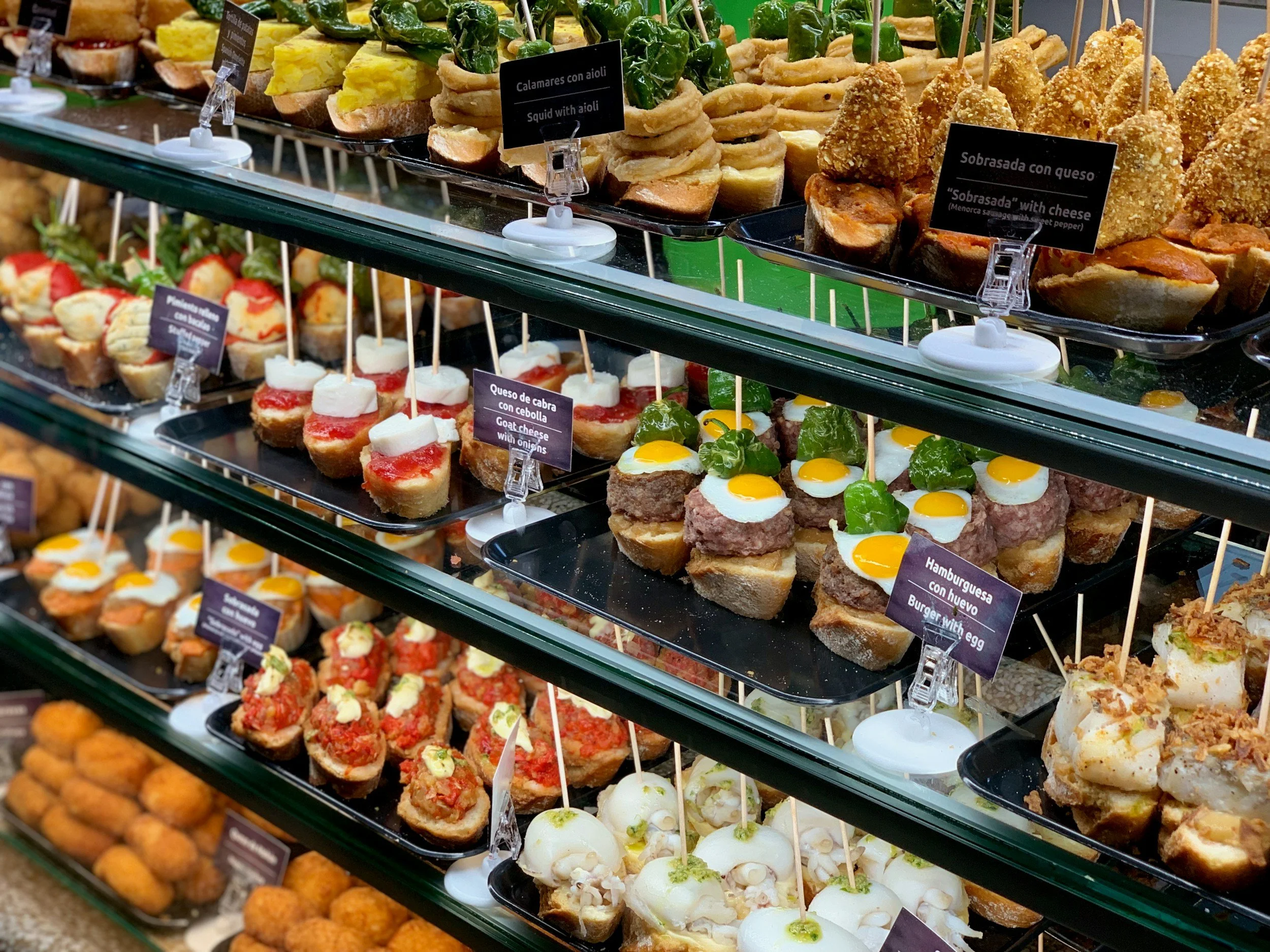
Classic stock image you would find in many “Tapas Tour” pages. By the way: those are pintxos…..
The multi-city model has a structural problem
Many of the companies that rank highly for "food tour Madrid" don't actually specialise in Madrid. Instead, they operate the same business model across multiple cities and countries, adding new destinations as they grow. One year they're launching tours in Lisbon, the next in Barcelona, then Madrid, followed by another European capital.
That model is efficient, but it inevitably raises a question. How much local knowledge can a company realistically build when it's constantly expanding into new destinations? A city's food culture isn't something that can simply be replicated from one location to another. It takes years of relationships with local businesses, an understanding of neighbourhood life, and a genuine connection to the city's evolving food scene.
A certain version of Spain also travels exceptionally well in marketing: flamenco posters, pitchers of sangria, and oversized pans of paella served hundreds of kilometres from where the dish actually belongs. It's an easy story to sell because it relies on familiar symbols rather than a deep understanding of the city itself.
When the same company can offer virtually identical food experiences in Rome, Lisbon, Barcelona, Amsterdam and Madrid, it's reasonable to ask whether the tour has been designed around the destination, or whether the destination has simply been fitted into an existing format.
A good example is Culinary Backstreets. The company began in Istanbul before expanding to cities across Europe, North America and Asia, with Madrid becoming one of its newest destinations. Like many multi-city operators, it follows a model that can be adapted from one city to another. Interestingly, after launching in Madrid, they also began including Alimentación Mediavilla for their Iberian ham tasting—the same specialist shop we've been using as part of our experience because of the exceptional quality of its products and the long-standing relationships we've built there.
What a single-city specialist offers instead
We only do Madrid. That's not a marketing line, it's the entire business model. We're not managing a roster of guides across a portfolio of cities. We're the people who've spent years building relationships with the same market vendor, the same jamón cutter, the same bar owners in Chamberí. When something changes, a bar closes, a producer retires, a new place opens that's actually worth a stop, we know within days, because it's our neighborhood, not a franchise territory.
This isn't a Madrid-only idea. Some of the food tour operators we respect most anywhere in Spain run on exactly this model:
Bites, in Seville, works only in Seville. No portfolio, no other cities, just deep knowledge of one city's tapas culture. https://bites.es/
Beyond Taste, in Barcelona, is essentially one person, Atair, hosting his own tours in his own neighborhood. There's no roster to manage because there's no company behind him, just him. https://beyondtaste.es/
Mimo, in San Sebastián, has been teaching Basque cooking and running pintxo tours since 2009, in San Sebastián only, nowhere else. https://mimo.eus/es/tour-gastronomico
None of them are trying to be everywhere. That's the point. A tour built by people who live in one city and have nowhere else to be tends to hold up to more scrutiny than one built to be replicable across a continent.
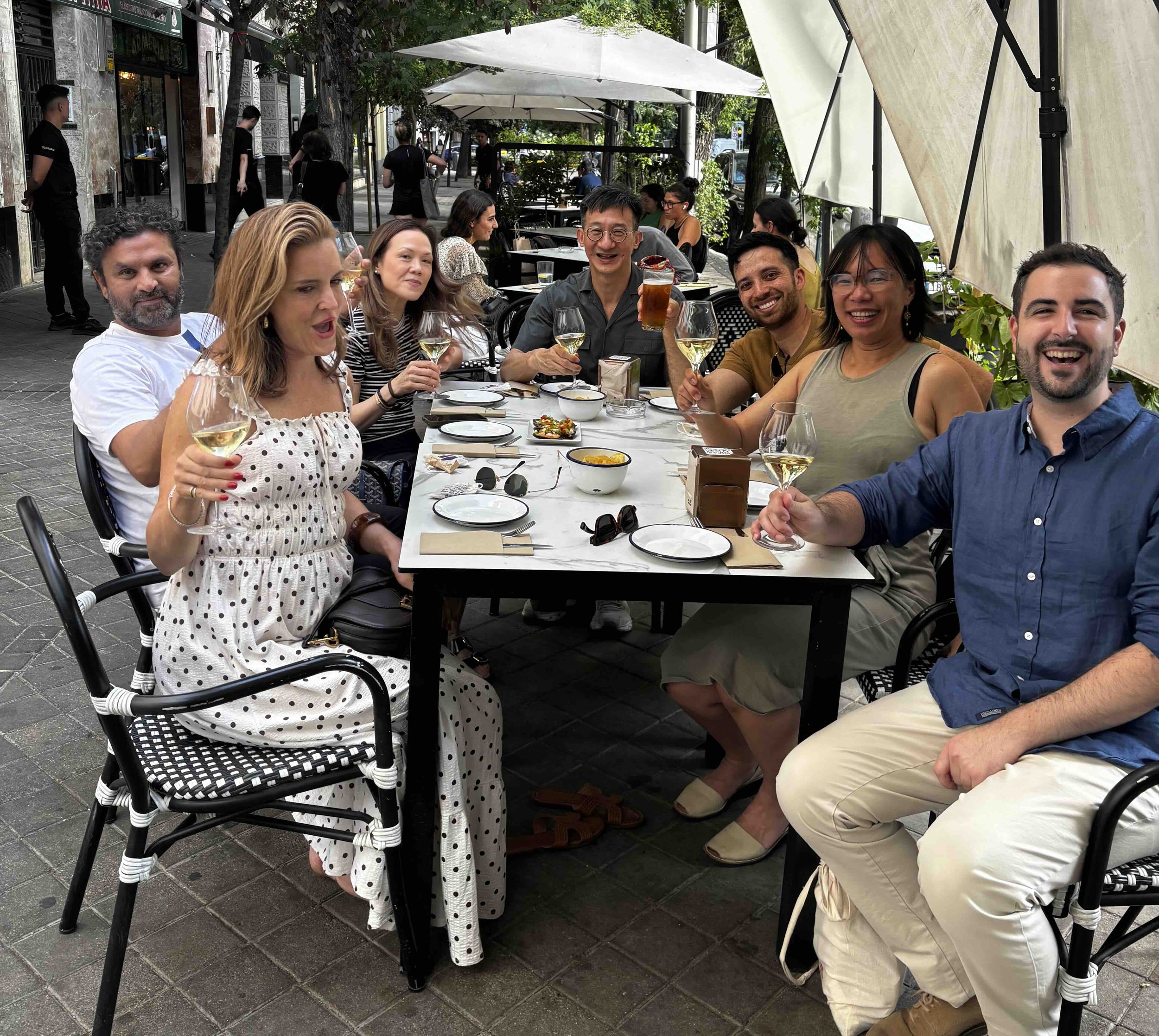
Why guests choose Flavours of Madrid
We also do something a lot of tours skip: we hand every guest a written list of the classic, already-famous spots worth hitting on their own time. The bocadillo de calamares and vermú bars in the centro, a plate of bacalao, the gambas al ajillo at Casa del Abuelo. You're going to end up at places like that anyway, every guidebook already points there, so we don't spend tour time walking you to them. What we use our time for instead is the current scene: the bar that's spent three generations perfecting one dish, the vendor who still sells mainly to the neighborhood, the places that don't need a single tourist to stay full and never bothered chasing one. That's the real deal, and it's not on anyone's printed list until you've already stood inside it.
Our flagship tour, Authentic Madrid, runs through Chamberí, the neighborhood we know better than any other in the city. It includes a stop at the Chamberí market, a conversation with a jamón maestro cortador who's been doing this for decades, vermut in a bar that's been open since 1949, and a version of tortilla we'd put up against any in the city, though we'd rather you decide that for yourself. We keep groups small on purpose, seven guests, never more, and for larger events we run them as separate private experiences instead of forcing twenty people through a route built for seven.
We're not saying bigger companies can't run a decent tour. Some of them do. What we're pointing out is what you're actually choosing between: a format built to travel well from city to city, or a team that only works in this one, that has nowhere else to be, and no reason to send you anywhere that doesn't deserve it.
If Madrid is the only place you're going, it's worth booking with the people for whom Madrid is also the only place they go.
