How to Order Tapas in Madrid
Start with a drink, order a couple of things for the table. See what happens next. That’s the way we do it here.
Walk into a busy bar in Madrid and nobody is having “a tapas experience”. They are meeting friends, having a quick vermouth before lunch, killing time before dinner, or staying longer than planned because the place feels right.
That is the useful way to approach it too. Don’t arrive with a list of ten dishes to tick off. Order a drink, look around, and let the bar tell you what it does well.
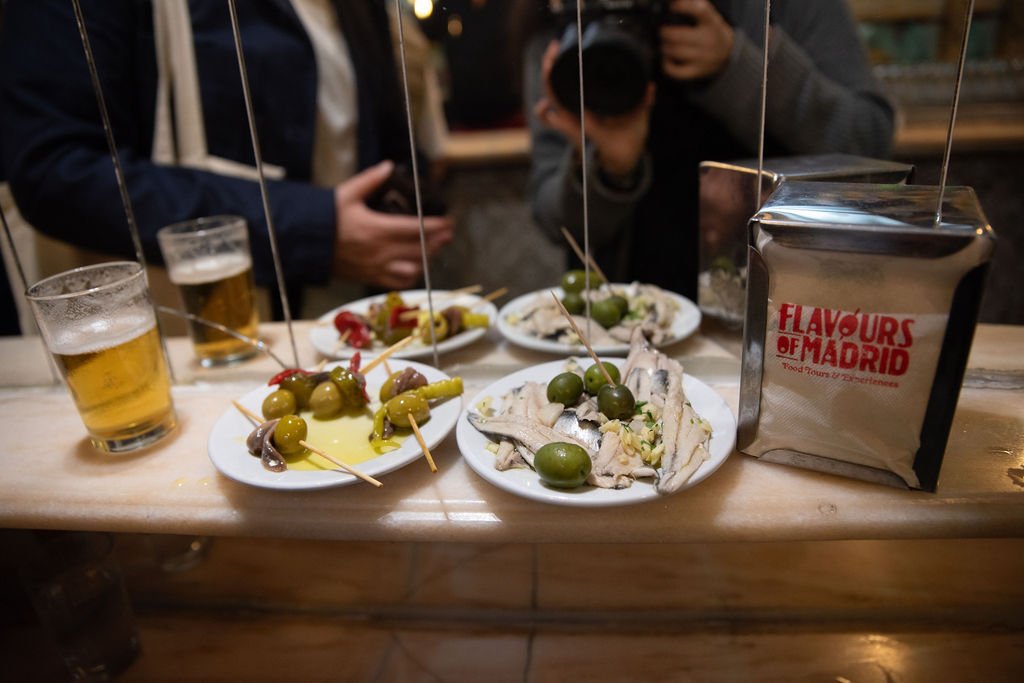
Barra or table? The first question tells you how the bar works
When someone asks “¿Vais a tomar algo?”, they are not making small talk. They are asking whether you are here for a drink or for a meal.
It matters because the rhythm is different. If you are eating, they may look for a proper table, especially around lunch or dinner. If you are just having a drink, the bar, a high table or a terrace seat is usually the natural place to start.
Saying you are only having a drink does not mean you cannot order food. It simply means you are not arriving for a full meal. A caña and a plate of anchovies is one thing; settling in for several raciones is another.
Outside busy meal times, if there is space, you can sit on a terrace for a vermouth or a beer and leave it there. No one expects you to turn every drink into lunch.
The useful answer is simple: say what you are in the mood for. The bar will take it from there.
In Madrid don’t count on a meal with your drink
You might get olives, crisps or a little plate of something when you order a caña. Great. Eat it. But don’t assume it is going to be dinner.
Other regions in Spain or some bars in Madrid are generous with the tapa that comes with a drink; others are not. It is not a test of whether the place is “authentic”. The food you actually want is usually on the menu, and that is where you should start looking.

A tapa can mean a small bite with your drink, or a small dish from the menu. The word is flexible.
This catches a lot of visitors out. A tapa can mean a small bite with your drink, or a small dish from the menu. The word is flexible.
A ración is more straightforward: it is a plate for the table. You order one, everyone picks at it, and then you decide whether you need another. A media ración is the smaller version, when the bar offers it — useful if you want tortilla, croquetas and something else without ending up too full after the first stop.
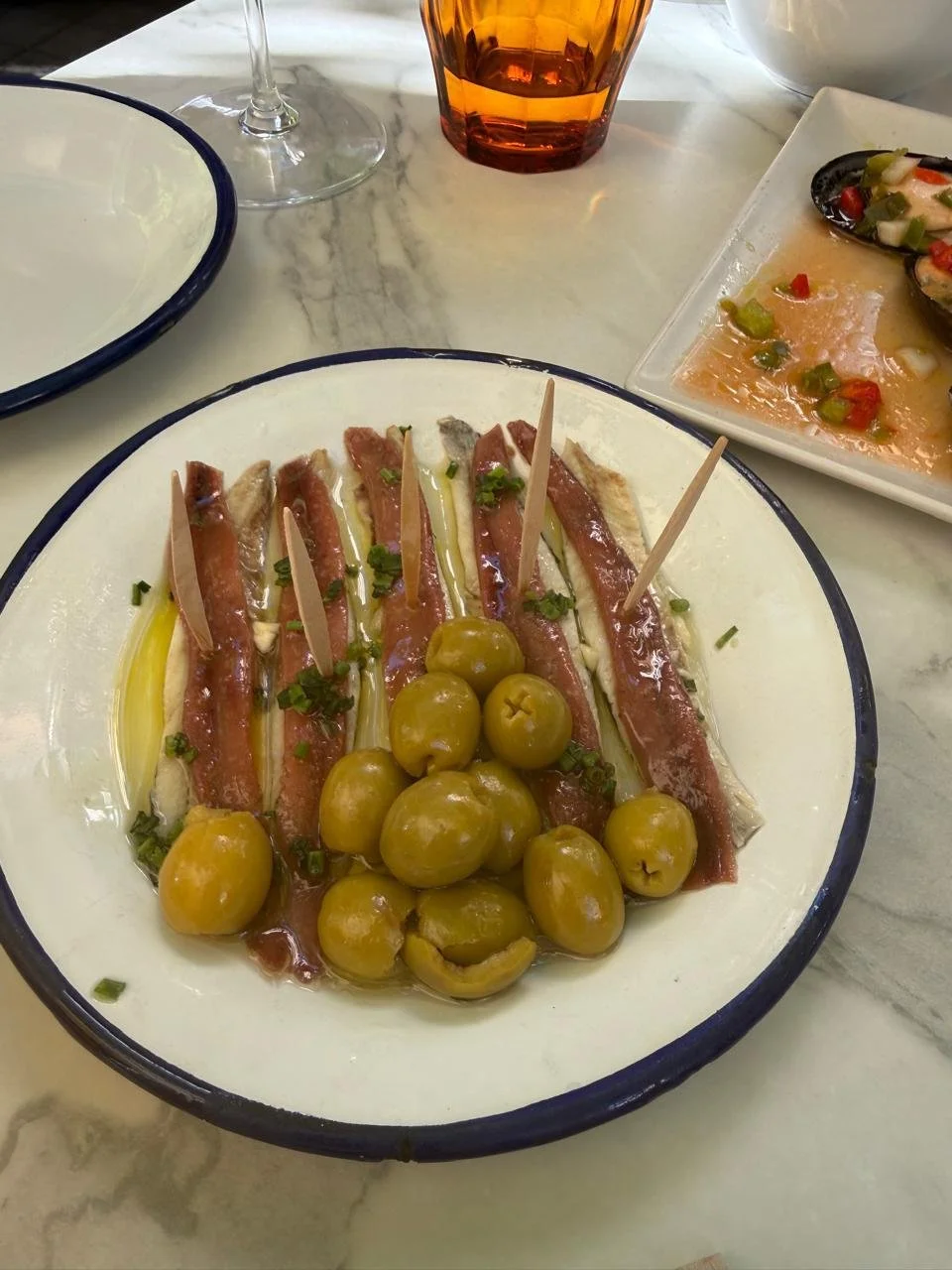
Classic Madrid Boquerones en Vinagre
A caña is small on purpose
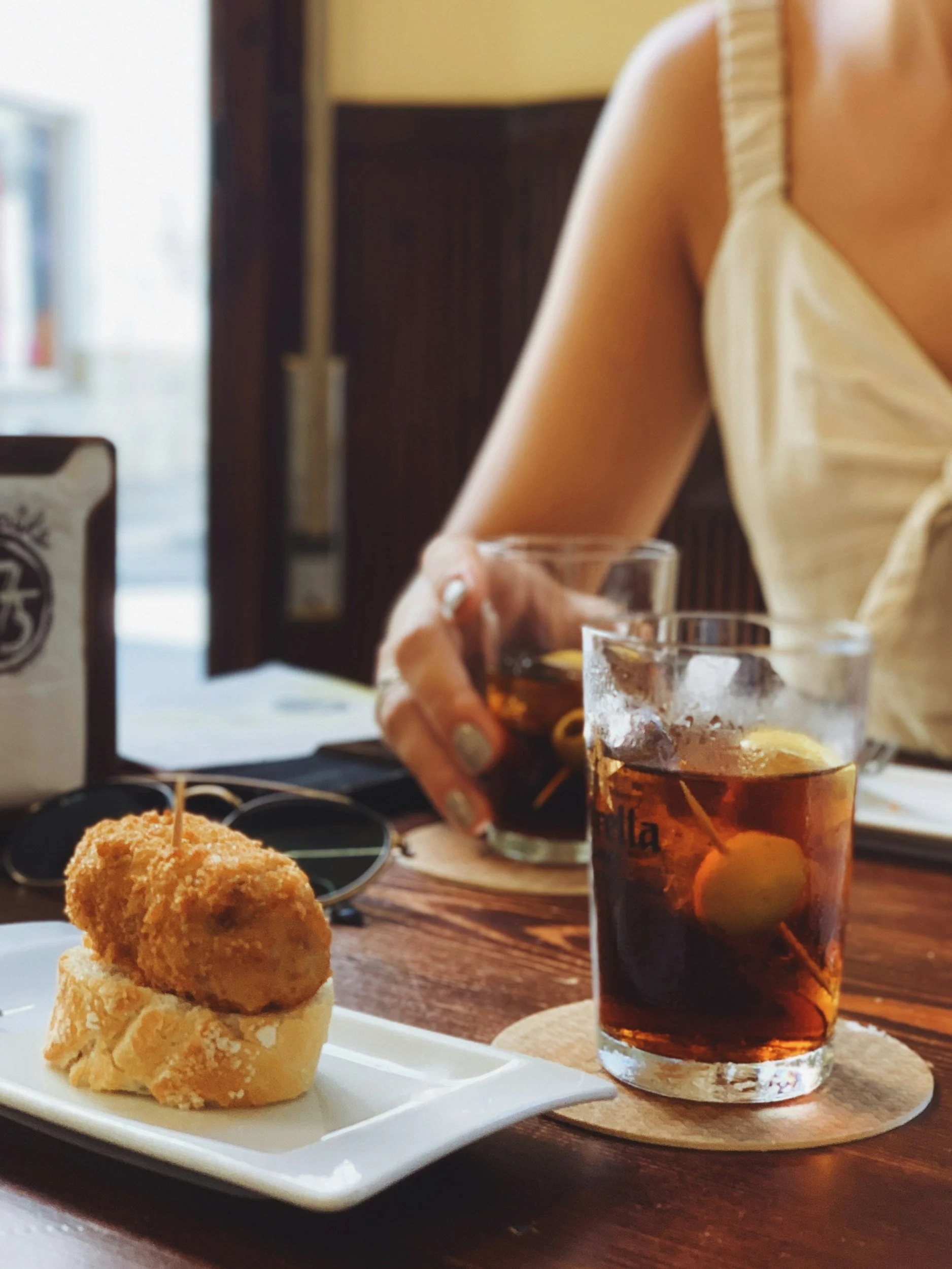
The small size of the drink matters: it lets you visit more bars and try more food without drinking too much. A caña is a small draught beer. It is not meant to last through a long conversation. It arrives cold, with a proper head of foam, and it is usually gone before it has time to warm up.
If beer is not your thing, order a vermut de grifo. That is vermouth from the tap — normally over ice, often with an olive or orange slice. It is especially good at aperitivo time, when a quick drink somehow turns into lunch.
For wine, ask for a chato if you want a small glass, or simply ask what is open. Madrid bars are not shy about giving you an opinion.
A first round that works for a small group
Start with drinks. Then order two plates to share — one familiar, one you would not have chosen at home.
For example: tortilla and boquerones, croquetas and grilled mushrooms, or bravas alongside a plate of cured cheese. Eat, talk, and see how the table feels before ordering more.
This is not a tasting menu with a fixed order. Madrid’s bar culture works best when you leave a little space for impulse: the dish you spot on another table, the special mentioned by the bartender, or the decision to pay up and walk five minutes to the next stop.
Useful phrases
¿Qué recomendáis hoy? — What do you recommend today?
¿Tenéis media ración? — Do you have a half portion?
Una caña, por favor. — A small draught beer, please.
¿Esto es para compartir? — Is this meant to share?]
Want to order like a pro?
Our small-group food tours take you into the bars, markets and neighbourhoods where Madrid eats every day — with the context that never makes it onto a menu.
The bar is usually the best seat in the house
If there is room at the bar, take it for the first round. You will see what is coming out of the kitchen, hear what people are ordering and get a better sense of the place.
A table makes sense when you are settling in, sharing more food or giving your feet a rest. But standing at the bar for twenty minutes is not a compromise. It is often where the evening starts to make sense.
One last thing: relax
You do not need to know every word on the menu. You do not need to order perfectly. And you definitely do not need to eat every famous dish in one night.